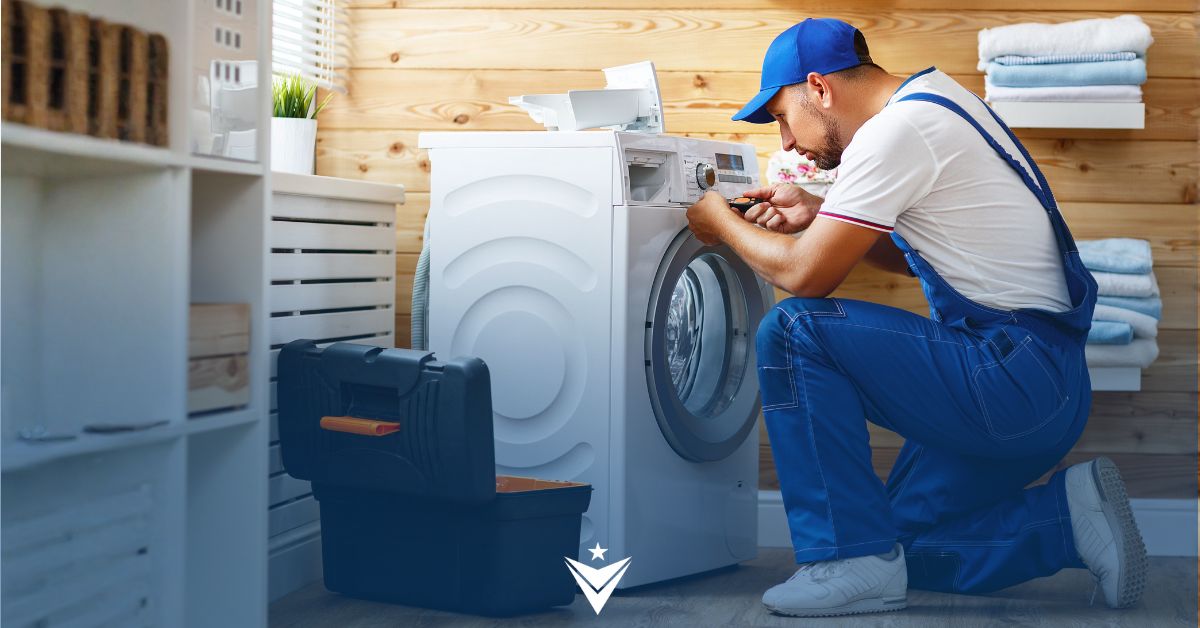
The repairs segment of the home services industry operates where failure meets urgency.
Unlike maintenance, which focuses on preventing problems, repair businesses respond when something stops working – appliances fail, systems break, structures leak or equipment becomes unsafe.
This category is driven by necessity rather than preference. When something breaks in a home, it needs to be diagnosed and fixed.
In this overview we’ll examine:
What the repair sector includes
The market size and demand drivers
Labor shortages shaping the industry
What day-to-day ownership actually looks like
Why veterans often align well with this sector
Before evaluating specific franchise brands, understanding how the industry itself works is the first step.
Table of Contents
What the Home Services Repair Sector Includes
Within the broader home services ecosystem, repairs refers to work performed after something fails or stops functioning properly.
This category is different from other home service sectors:
Cleaning: sanitation and recurring upkeep
Maintenance: preventative servicing before failure occurs
Repairs: restoring functionality after a breakdown
Skilled trades: licensed system replacements or installations
Repair-focused franchises often operate in service niches such as:
- Appliance Repair
- Garage Door Repair
- Glass and Window Repair
- Water Damage Restoration
- Structural patch and repair work
- Emergency property repairs
- Equipment diagnostics and restoration
Many of these businesses are built around diagnosing problems quickly and restoring function efficiently.
How Large Is the Home Repair Market?
The broader U.S. home services industry is one of the largest service sectors in the country.
Industry research estimates the market at approximately $842 billion in 2026, projected to grow to $989 billion by 2031.
Source: Mordor Intelligence
Within that overall market, maintenance and repair services account for roughly 37.82% of total spending.
In practical terms, nearly 2 out of every 5 dollars spent on home services goes toward maintaining or repairing existing systems.
Even when homeowners delay remodeling projects or cosmetic upgrades, repairs remain necessary.
Why Repair Demand Is Growing
The Aging Housing Stock
One of the strongest drivers of repair demand is the age of American homes.
The median age of owner-occupied housing in the United States has reached 41 years, with nearly half of all homes built before 1980.
Source: National Association of Home Builders
Older homes naturally produce more mechanical failures, structural wear, and equipment breakdowns over time.
The Mortgage Lock-In Effect
Rising mortgage rates have reduced homeowner mobility.
Research from the Federal Housing Finance Agency found that each percentage point difference between a homeowner’s mortgage rate and current market rates reduces the likelihood of selling by 18.1%.
Instead of moving to a new home, many owners are staying in place and investing in repairing the one they already own.
Source: Federal Housing Finance Agency
The Rise of Professional Repair Services
Modern homeowners are increasingly outsourcing repair work rather than attempting do-it-yourself solutions.
Safety risks, technical complexity, and time constraints have shifted more repair work into professional service companies.
For franchise operators, this trend continues to expand the addressable market.
The Skilled Labor Shortage
One of the defining realities of the repair sector is the shortage of qualified technicians.
The Home Builders Institute reported over 456,000 open construction and skilled trade jobs in the United States in 2024.
Source: Home Builders Institute
At the same time, industry data suggests there are only about 57 home service workers for every 1,000 owner-occupied homes.
Source: Today’s Homeowner
For repair businesses, this shortage creates both risk and opportunity.
The challenge is recruiting and retaining technicians.
The opportunity is that operators who can build strong teams often win market share simply by being available.
What Running a Repair Franchise Actually Looks Like
From the outside, repair businesses appear to revolve around fixing broken things.
In reality, the owner’s role is far more operational.
Most owners spend their time managing:
- Service request intake
- Technician dispatch and scheduling
- Job diagnostics and quoting
- Parts ordering and coordination
- Customer communication
- Review management and service recovery
Unlike maintenance services, which can be scheduled months in advance, repairs often involve urgent customer situations and rapid response expectations.
Operational discipline becomes the difference between profitable service calls and costly callbacks.
Cost Structure in Repair Businesses
Repair businesses typically operate with a cost structure built around labor and equipment mobility.
Major cost centers include:
- Technician wages and benefits
- Service vehicles and fuel
- Parts and equipment inventory
- Insurance and liability coverage
- Dispatch and scheduling software
- Marketing and lead generation
Because repairs occur after failure, customers are often more motivated to solve the problem quickly, which can support stronger pricing than preventative services.
However, poor diagnostics or repeat service visits can quickly erode margins.
Why Some Repair Businesses Struggle
Common operational issues include:
Slow response times
Difficulty hiring technicians
Poor diagnostic accuracy
Inconsistent quoting practices
Weak customer communication
Because repair situations often involve stress and urgency, customer experience becomes a critical factor in reputation and repeat business.
Why Veterans Often Align Well With Repair Businesses
Many military roles involve troubleshooting equipment failures, coordinating logistics, and restoring systems under pressure.
Those same skills translate naturally into the repair sector.
Veterans already operate within systems built around:
- diagnostics and problem solving
- operational discipline
- time-sensitive mission completion
- team leadership in technical environments
Franchising data also reflects this alignment.
Veterans represent roughly 7% of the U.S. population but approximately 14% of franchise owners.
Source: International Franchise Association
Service-based franchises, particularly within home services, consistently rank among the most common industries entered by veteran entrepreneurs.
Who Repair Franchises Tend to Fit
Strong fit for owners who:
enjoy fast-paced operations
can manage teams and logistics
prefer necessity-driven industries
are comfortable solving operational problems
More challenging for individuals seeking a highly passive business model.
Frequently Asked Questions
What is a repair franchise?
A repair franchise operates a service business focused on diagnosing and fixing problems within homes or properties after systems fail.
How large is the repair sector within home services?
Maintenance and repair services account for roughly 37.82% of the broader home services market.
Are repair businesses seasonal?
Some niches experience seasonal demand spikes, but most repair services operate year-round.
Do owners need technical experience?
Many owners manage technicians rather than performing the repairs themselves.
Next Steps
If you’re evaluating the home services industry, understanding the structure of each sector is the first step.
You can:
• Schedule a conversation with a Vetrepreneur Franchise Coach
• Explore other industries within the Home Services franchise category
Ownership decisions start with understanding the industry itself.