Not every franchise serves consumers. Some power the businesses behind them – and that’s where scale, stability and long-term relationships live.
Table of Contents
What Is a B2B Franchise?
A B2B (business-to-business) franchise provides products or services to other businesses—not individual consumers.
That distinction matters more than it sounds.
Instead of relying on foot traffic, seasonal demand, or consumer trends, B2B franchises are built around helping companies operate more efficiently. They solve real, ongoing problems – whether that’s maintaining facilities, managing IT systems, supporting hiring efforts or driving customer acquisition.
Because of that, revenue is often tied to contracts, retainers and ongoing service agreements, not one-time transactions.
Over time, that creates a very different type of business:
One built on consistency, relationships, and long-term value.
Why the B2B Franchise Industry Is Growing
The growth of B2B franchising is directly tied to the growth of small businesses themselves.
According to the U.S. Small Business Administration, there are more than 36 million small businesses in the United States – representing 99.9% of all businesses.
Each of those businesses needs support to operate – whether that’s marketing, staffing, compliance, maintenance or technology.
At the same time, companies are becoming more selective about where they invest their time and resources. Instead of building everything in-house, they’re outsourcing non-core functions to specialized providers.
That shift has created a massive and growing opportunity.
Data from the International Franchise Association shows that business services franchises account for more than 100,000 locations and generate over $100 billion in annual output.
As long as businesses exist, they will need other businesses to support them.
Why B2B Franchises Stand Out
Built on Recurring Revenue
Most B2B franchises aren’t chasing new customers every day just to stay afloat.
They’re built around ongoing service agreements – contracts that renew monthly, quarterly or annually. Instead of starting from zero each month, you’re building on top of an existing base of business.
That shift changes everything.
It allows owners to focus less on constant acquisition and more on retention, expansion and operational excellence – which is where real growth happens.
Lower Reliance on Location & Foot Traffic
Many B2B franchises don’t require a retail storefront or high-traffic location.
They operate through direct relationships, local outreach and service delivery – not walk-ins. In many cases, owners can run the business from a home office or small operational space.
The result is a model that is often:
- Leaner
- More flexible
- Less exposed to consumer volatility
Growth Through Relationships, Not Volume
In a consumer business, success often comes down to volume.
In B2B, it’s different.
A handful of strong client relationships can drive significant revenue – especially when those relationships are built on trust, consistency and results.
That means growth isn’t just about more customers. It’s about:
- Keeping the right ones
- Expanding within existing accounts
- Building a reputation that generates referrals
Essential Services Create Stability
Most B2B franchises operate in areas that businesses can’t ignore.
Facilities still need to be cleaned. Systems still need to be secured. Employees still need to be hired and managed.
These are not discretionary expenses – they’re operational requirements.
That’s what gives many B2B businesses their resilience, even when the broader economy shifts.
Who Succeeds in a B2B Franchise?
B2B ownership isn’t about being the loudest marketer or having the best storefront.
It rewards people who can build trust, lead teams and operate with consistency.
The most successful owners tend to think in terms of:
- Relationships over transactions
- Systems over chaos
- Long-term value over quick wins
They’re comfortable having conversations with other business owners, understanding their challenges and positioning solutions that actually make sense.
They also understand that sales may take longer – but when done right, those relationships compound over time.
Why Veterans Often Excel
B2B franchises align closely with how many Veterans are already wired to operate.
They reward discipline, structure, accountability and leadership – traits that are developed and reinforced through military experience.
There’s also a natural alignment in how trust is built.
In B2B, credibility matters. Follow-through matters. Doing what you say you’re going to do matters.
Those aren’t learned traits for many Veterans – they’re already there.
Key B2B Franchise Categories
While the B2B category is broad, most opportunities fall into a few core areas.
Facility Services & Maintenance
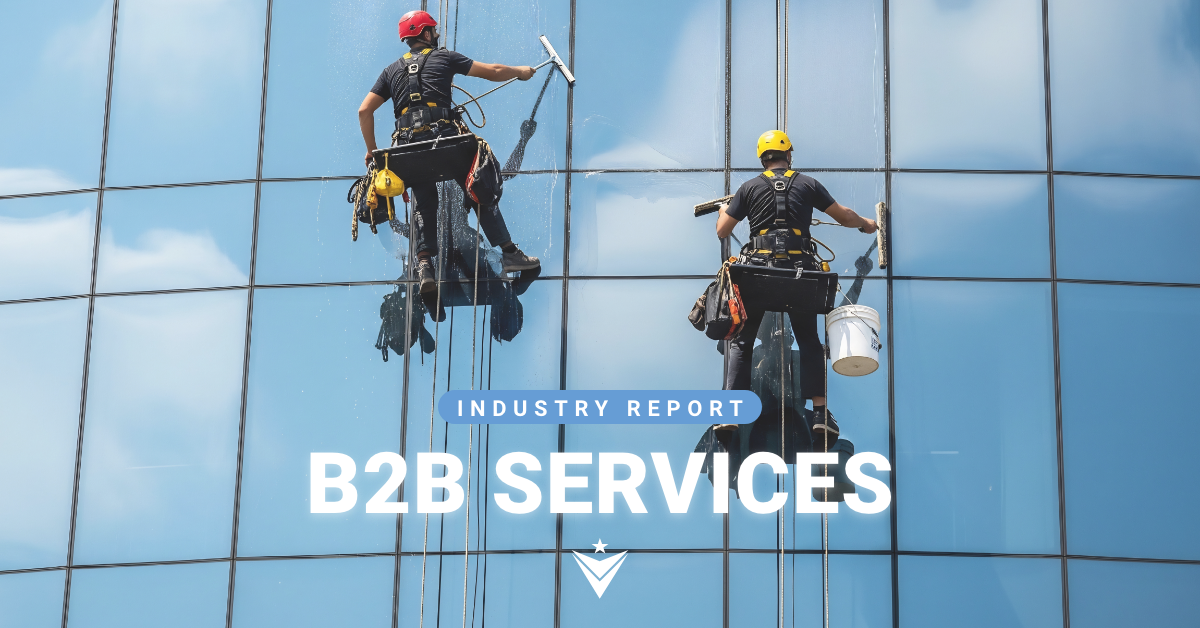
These businesses support the physical operation of other companies – everything from cleaning and restoration to exterior maintenance.
They tend to offer recurring contracts and require building and managing service teams, making them highly scalable when executed well.
Business Services & Consulting
This category focuses on helping companies operate more effectively.
That can include staffing, HR support, business coaching, or financial consulting. These models are often relationship-driven and can generate strong margins over time.
Marketing, IT & Technology Services
As businesses continue to digitize, demand for marketing and technology support continues to grow.
From digital marketing agencies to managed IT and cybersecurity services, these franchises position owners at the center of how modern businesses operate and compete.
What to Consider Before Investing
B2B franchises are powerful – but they require the right mindset.
First, sales is not optional. You’re responsible for building your client base, especially early on. This often involves direct outreach, networking and relationship development.
Second, the sales cycle can take time. Unlike consumer purchases, businesses evaluate decisions carefully. The upside is that once you win a client, the relationship tends to last longer and generate more value.
Third, retention matters. Losing a single client can have a meaningful impact, which means service quality and relationship management are critical.
Finally, many models require building a team. Even if you start lean, growth typically comes from your ability to recruit, train and lead others.
Is a B2B Franchise Right for You?
A B2B franchise isn’t for everyone – and that’s a good thing.
But for the right person, it offers a very different path into business ownership.
If you’re looking for a model that is:
- Built on relationships, not foot traffic
- Driven by contracts, not transactions
- Scalable through systems and teams
- Designed for long-term growth
Then B2B is worth serious consideration.
Frequently Asked Questions
What does B2B mean in franchising?
B2B stands for business-to-business. These franchises sell products or services to other businesses rather than individual consumers.
Are B2B franchises profitable?
Many B2B franchises offer strong potential due to recurring revenue models, lower overhead, and long-term client relationships. Success depends on sales execution and retention.
Do B2B franchises require a physical location?
Many can be operated from a home office or small operational space, depending on the model.
Are B2B franchises a good fit for Veterans?
Yes. The structure, leadership requirements, and operational focus align well with military experience.
What are the biggest challenges in B2B franchises?
The primary challenges are generating clients, managing longer sales cycles and maintaining strong relationships over time.
How do B2B franchises get customers?
Most rely on networking, referrals, local outreach and direct sales rather than traditional consumer marketing.
Ready to Explore B2B Franchise Opportunities?
If you’re serious about business ownership, you don’t have to figure it out alone.
Our team works with you to identify the right opportunities, understand the investment and navigate the process with clarity.
You can:
• Schedule a conversation with a Vetrepreneur Franchise Coach
• Explore other industries within the Home Services Franchise Category
Ownership decisions start with understanding the industry itself.